
'Studying was never an important part of our life, surviving was.'

'Justice may or may not happen, but who are those people who did this to her?' 'If the hospital authorities had helped us that day, or the police, then the real culprits would have been caught.' 'Getting justice for my daughter is my goal now and I want the CM to remember that.'

Sidhu is the only MP to appear in a number of advertisements and programmes.

'Asset allocation should change only if your goals, life situation, or risk profile have changed.'

Last November, ED conducted searches under the provisions of the PMLA at nine locations in Telangana.
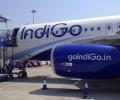
Shares of low-cost airline IndiGo hit record high on the bourses soon after reports of pilot crisis at Vistara emerged. The development also saw airfares surge by around 25 per cent on select routes. Shares of IndiGo hit a lifetime high of ~3,68.5 on April 2, 2024, and has gained 2.4 per cent on the bourses in April.


The most important step is delivering what is needed -- a fairer IPO pricing, notes Debashis Basu.

Competition in the fast-growing quick commerce sector is heating up as Swiggy Instamart faces a tough challenge in narrowing the gap with Blinkit, which currently dominates the market. In the second quarter (Q2) of 2024-25 (FY25), Instamart's gross order value (GOV) rose by 42.1 per cent quarter-on-quarter (Q-o-Q) and 75.5 per cent year-on-year (Y-o-Y), reaching Rs 3,382 crore.

'The past few quarters have seen prohibitive fares for advance bookings, only to dip closer to departure.'

Over 100 Indian immigrants, including 33 each from Haryana and Gujarat, 30 from Punjab, and several from other states, were deported from the US after undertaking perilous journeys filled with extortion and hardship. The returnees landed in Amritsar in a US military plane and are now back home, facing huge debts and emotional trauma. Many of them were lured by promises of a better life in the US but fell victim to human trafficking and extortion rings. The families of the deportees are demanding strict action against the travel agents who facilitated their illegal journeys.

Sinha called for justice to the victims as he blamed Pakistan for "still trying to kill innocent people" in the region to disrupt peace.

GAIL India's second quarter (Q2FY25) performance met expectations.

Seven electric two-wheeler companies have suffered a cumulative loss of over Rs 9,000 crore on account of unpaid dues and loss of market after their subsidies were stopped last year, the Society of Manufacturers of Electric Vehicles (SMEV) said on Wednesday. These companies have also been directed by the govt to refund the subsidies availed by them. The audit by SMEV's chartered accountants indicates the total, cumulative damages to affected companies could account for over Rs 9,000 crore on a conservative basis, it noted.

'Consider 40% to 50% in equities, 10% in gold as a hedge, and the remaining 30% to 40% split between multi-asset funds and hybrid funds.'

'The IPL provides a different ladder in terms of recognition.' 'If you do well, you will obviously get noticed and it enhances your selection into white-ball formats.'

Banks reported muted treasury gains during April-June of FY25 (Q1FY25) following Reserve Bank of India's (RBI's) revised norms on investment portfolio effective from April 1, 2024, despite softening of government bond yields. "Banks have reported muted treasury gains during Q1 of FY25 despite softening of yields across the curve. "The main reason was change in the investment valuation and classification guidelines by the RBI.

Global factors and FII activity will dictate trends in domestic equity markets this week while assembly poll results of Maharashtra and Jharkhand may impact stocks on Monday, say analysts. Stock markets witnessed a spirited recovery on Friday with benchmark Sensex and Nifty notching the best single-day gains in more than five months and offering relief after weeks of correction.

>The success of Stree 2, which emerged as the highest-grossing Hindi film, was significant to PVR Inox's performance in the July-September quarter.

After a quiet April-June quarter in 2024-25 (FY25), the operational and financial performance of India's largest listed hotel company, Indian Hotels Company, clearly rebounded in the July-September quarter (Q2) of FY25. With double-digit growth in the average room rate (ARR) and higher occupancy, the Taj Hotels chain owner reported a 16 per cent revenue increase and a 30 per cent rise in operating profit.

Do we have enough trained oncologists and medical professionals in India to man these over 4,500 beds in the public sector?

Tasting success with the relaunch of Sensex derivatives in the onshore market, BSE is preparing for the 'offshore' debut of its 30-share index, which has become synonymous with the domestic markets. Sources in the know said that the India International Exchange (India INX), a subsidiary of BSE, received approval in July from the International Financial Services Centres Authority (IFSCA) to launch Sensex 30 derivatives contracts.

'We found certain banks having lakhs of such accounts with apparently no valid reason.'

People in full-time jobs should especially avoid intraday trading as it results in loss of focus and affects performance.

Once we break free of the idea that land is scarce, real estate is just a pile of bricks, steel, and glass. Any price surge will kick off a supply response, which kills off the possibility of sustained price appreciation, points out Ajay Shah.

Businesses have resumed but it's not business as usual in the capital city of Bangladesh.

Ola Electric share price strategy: The meteoric rise of Ola Electric share price has left analysts and investors bewildered. Yet, they suggest investors hold on to the stock as it remains a pure "momentum" play. Since its listing on August 9, the stock has surged 92 per cent (till August 19) over its issue price of Rs 76, taking its market capitalisation to a little over Rs 63,000 crore.

The stock of the country's largest plastic pipe maker Supreme Industries has shed 22 per cent since its highs in October. The September quarter results were below expectations as the volatility in polyvinyl chloride (PVC) resin prices led to a major destocking across the trade channel.

City's alleged breaches stretch from the 2009-10 season to the 2017-18 campaign, the league said on Monday.

Nitin Desai, who has known Dr Singh from 1971, extends his 'deepest condolences to his wife Gurcharan Kaur and to his three talented daughters Upinder, the historian; Daman, the writer; and Amrit, the human rights activist.'

There was plenty of action over the last 12 months that kept the loyal Indian fan interested.

India Inc continued to grapple with muted revenue growth in the September 2024 quarter (Q2FY25) and witnessed a decline in margins and profits. The headwinds were especially severe for non-financial companies, while banking, financial services, and insurance (BFSI) firms significantly outpaced the rest of the corporate sector. The total profit of 1,353 listed companies that have released their Q2FY25 results thus far dropped by 0.6 per cent year-on-year (Y-o-Y) - the first cumulative earnings decline in eight quarters.

Indian airline industry is expecting to prune its net losses to Rs 3,000-5,000 crore in this fiscal from an estimated Rs 17,000-17,500 crore in FY2023 on the back of improved yields and stable cost environment, credit ratings agency ICRA said on Tuesday. At the same time, ICRA also estimated that domestic air passenger traffic will expand by 8-13 per cent each in FY2024 and FY2025. The rating agency has also maintained its stable outlook on the industry in view of healthy passenger traffic growth, improved yields and a stable cost environment.

Honda Cars India (HCIL) net profit dropped by 52.8 per cent year-on-year (Y-o-Y) to Rs 661.4 crore in 2023-24 (FY24), primarily due to deferred tax of Rs 359.8 crore, according to the annual results submitted to the Registrar of Companies (RoC) and reviewed by Business Standard. In FY24, the company's production increased by 16 per cent Y-o-Y to 134,807 units.

'There is more expansion in the industry happening in retail lines, so we will continue to focus on those lines.'

The stock of online classified major Info Edge (India) was up over 6 per cent on Friday on expectations of demand improvement for Indian IT companies. Strong revenue growth prospects for each of its online verticals - including recruitment, matrimony, real estate, education, and upside from its holdings in companies such as Zomato - had prompted Goldman Sachs to upgrade the stock. Info Edge's standalone revenue grew 10.6 per cent year on year (Y-o-Y) in Q2FY25, beating consensus. 99acres (+16.9 per cent Y-o-Y) and Jeevansathi (+33 per cent Y-o-Y) were drivers of growth while recruitment grew 8.5 per cent Y-o-Y.
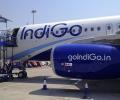
IndiGo has restored annual increments for more than 4,500 pilots as a financial turnaround helped the airline make a profit in Q3 FY23 after three quarters of loss. An email from the airline's management last week informed pilots of the restoration from April. "The component of annual increment for Indian captains (Rs 10,000 per month) and Indian first officers (Rs 5,000 per month) on the Airbus and ATR fleet which was stopped due to Covid will restart from April 1, 2023," the airline's senior vice president (flight operations) Ashim Mitra said in the staff email.

Before heading abroad, ensure your travel insurance policy offers all essential coverage and has an adequate sum insured.

Many are attracted by the potential for large gains, but don't necessarily seem to understand that a single trade gone wrong can wipe out their accumulated profits.

'As China's reopening euphoria fizzled out on the back of some disappointing economic data, we saw inflows coming back to India with full force in the past 3-4 months.'
 © 2026 Rediff.com - Advertise with us - Disclaimer - Privacy Policy - Sitemap - Feedback - About us - Terms of use - Grievances